
Track Roosevelt Blotter Dates
Older Roosevelt County entries need context to verify. Save the article title, publication date, reporting span, and the exact agency named. Booking and release dates can differ. Keep both. A precise request helps a records custodian find the right arrest and keeps a similar name or an unrelated Portales report from being matched to the wrong RCDC booking.
Archive order can mislead. A story posted Monday may summarize events from days before, so sort by the date inside the article rather than the results page. A release noted in a jail log may trace back to an earlier booking, and a police call does not always end in an arrest or RCDC admission. Weekend compilations sometimes repeat old context without any new booking. When names or dates conflict, stop there and ask the originating office. Never stitch partial facts into a new claim. The article stays a secondary account, while RCDC, the arresting agency, and the court each control their own official record.
Roosevelt County Blotter Sources
Roosevelt County publishes no official 72-hour, weekend, or weekly booking page. The county detention site lists facility contacts but no public roster. The useful public archive comes from Eastern New Mexico News. Its jail-log articles report people booked into or released from RCDC. Its police-blotter articles sample calls and arrests around Portales. Neither format counts as a full jail census.
That gap shapes every search. A Portales police item may start with a city incident. It may move to an RCDC booking. Then it can end in magistrate or district court. A jail-log item begins with detention data. Absence from one source never means absence from them all.
Read Roosevelt Arrest Archives
Search the local-news archive backward. Pick a clear date range. Results mix jail logs, police blotters, and unrelated stories, so read the source label and time span rather than the headline alone.
- Open the Eastern New Mexico News author or archive index and identify jail-log or police-blotter items.
- Record the article publication date, then read its stated interval. Do not assume a weekend article is a one-day list.
- Separate booked, released, and police-call entries. Each describes a different stage or event.
- Note whether the source says RCDC, Portales Police, or another agency. Do not infer an agency when none is named.
- Confirm current custody with RCDC and legal progress through New Mexico Courts.
- Use county IPRA for a specific older booking sheet, release record, or photo if created and releasable.
For a narrow current window, the Roosevelt County arrests last 24 hours page explains the paper's same-day convention and a direct RCDC check.
Roosevelt Arrest Log Fields
Every local report prints only what its publisher chose. Fields shift from article to article. The list below reflects typical Roosevelt County news formats, and no single entry is guaranteed to include every item.
| Field | How to read it |
|---|---|
| Person name | May identify a person reported as booked or released. |
| Age | Sometimes shown, or marked unavailable. |
| Event date | May differ from both booking time and publication date. |
| Status | Booked and released must remain separate labels. |
| Listed charge | An charge as reported, not a disposition. |
| Agency wording | May distinguish Portales police activity from an RCDC jail item. |
| Photo | No consistent photo field was observed in sampled jail-log text. |
New Mexico law names original chronological police blotters among records open to public inspection. That rule has limits, though. It does not make the newspaper archive the original blotter, and it does not open every investigative detail. Confidential, juvenile, sealed, and expunged material can stay restricted.
Weekend Roosevelt Booking Rollups
Roosevelt County jail-log coverage shifts between daily and weekend or multi-day intervals. A weekend rollup works well for catching delayed public reporting on arrests. It works poorly for current custody. Releases, transfers, and later bookings may have already changed a person's status. The Eastern New Mexico News staff archive shows the paper's recurring jail-log and police-blotter coverage. It includes longer spans.
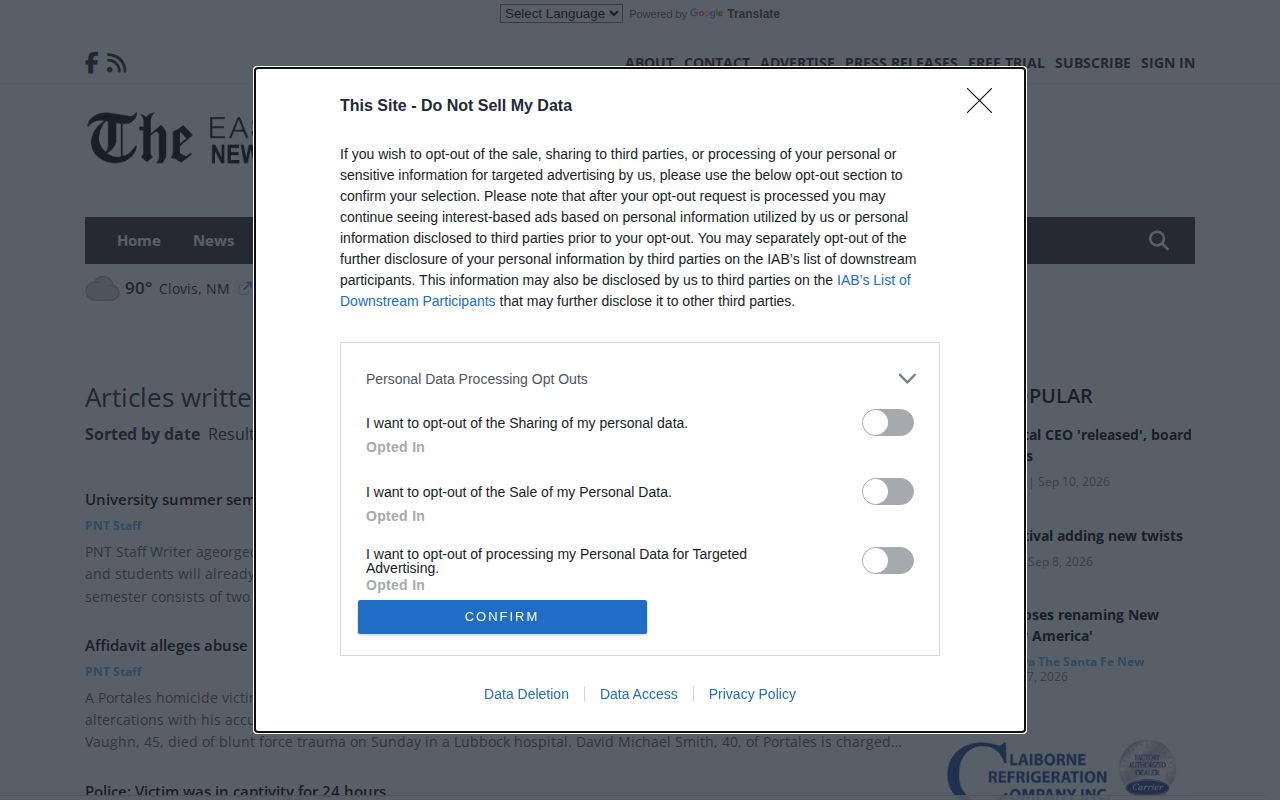
The archive reaches far back. It posts on no fixed schedule, though, and it is not an official county roster. Holidays stretch the gaps. Never read a missing day as a day with no arrests. Search the next publication date. Then use RCDC or a written records request when exact timing matters.
Portales Booked at RCDC
Current local coverage includes a "Portales Booked" or RCDC section. Entries may list a name, an age or a missing-age notation, and a charge. Portales is the county seat. It is the community most visible in the paper's police-blotter reporting. That does not make the section a Portales Police Department database. RCDC serves agencies and courts with jurisdiction across the whole county. The May 14 Eastern New Mexico News jail log shows the RCDC section. Its article timestamp is right there.
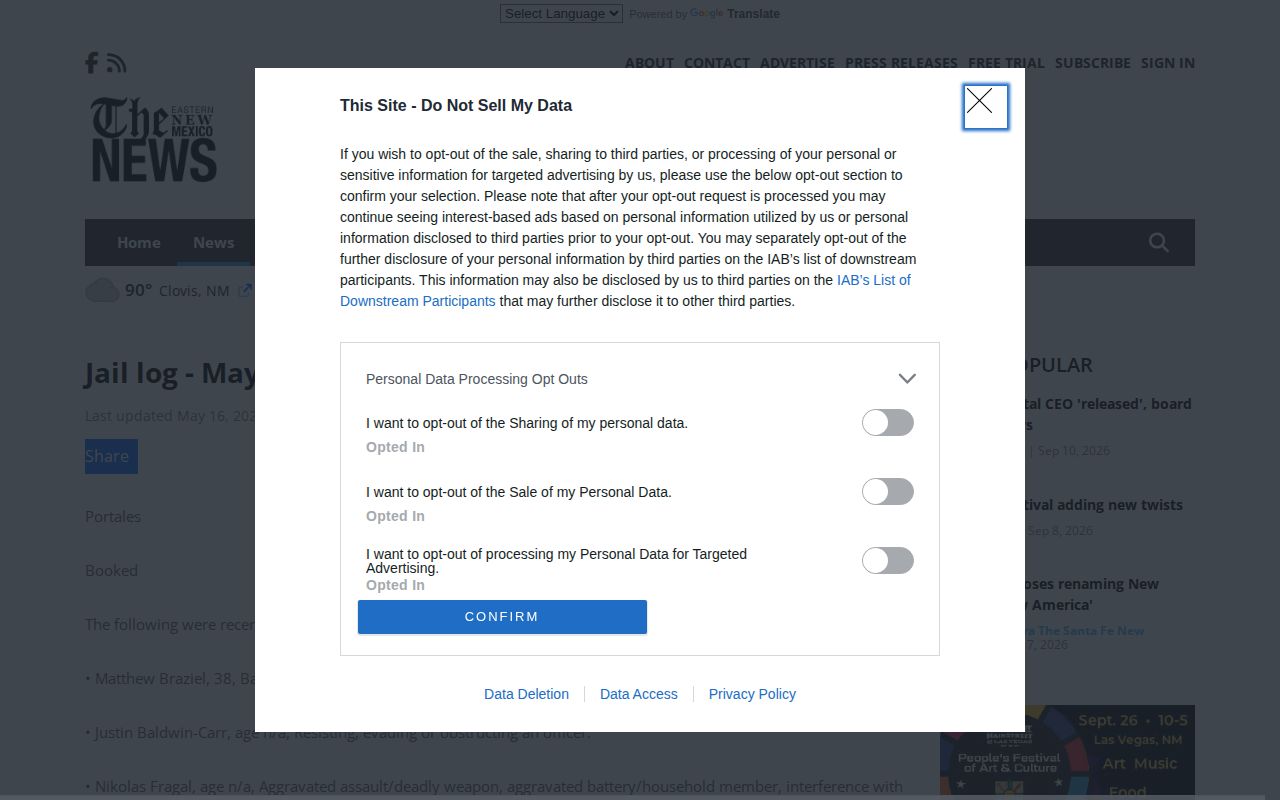
The heading signals the report's detention context. It proves neither current custody nor the final court result. Elida and Floyd have no newspaper feeds of their own. For those towns, find the arresting agency first. Then use RCDC for county booking or custody, and the proper city or sheriff custodian for the incident record.
Roosevelt Courts After Arrest
Court records tell a different story than a jail roster. Roosevelt Magistrate Court takes misdemeanor, DWI, traffic, and felony preliminary matters. The district court handles felonies under general jurisdiction. Both belong to the Ninth Judicial District. After a Roosevelt County arrest, check the docket. That is where you confirm what a case is actually doing. One catch: the online docket only reaches ahead about a week. It shows today plus six days. The court also warns that entries may be missing. A fresh arrest might not surface there immediately. It might not appear at all if no case was ever filed. The official Roosevelt Magistrate Court docket posts that short window and its omission warning plainly. For anything beyond it, the clerk of court is the authority on final case status.
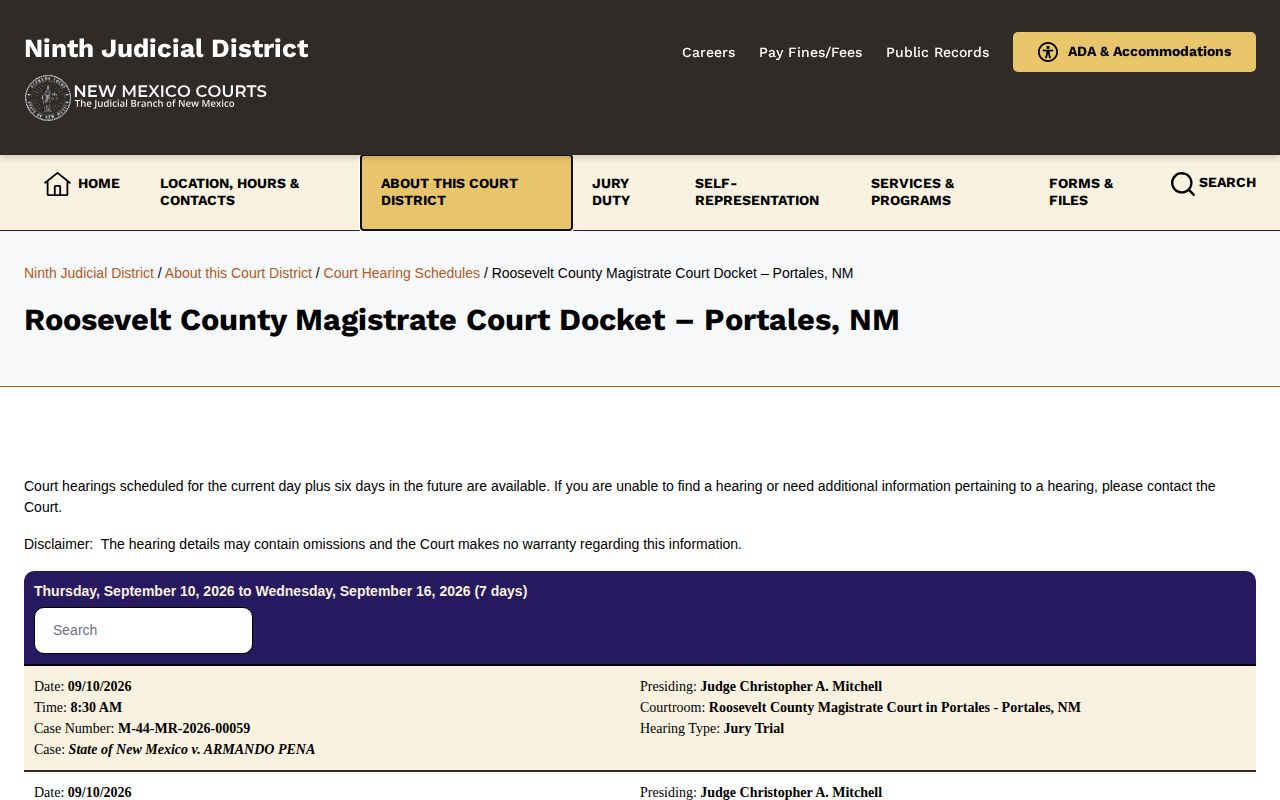
The court docket belongs after the news search because it tracks hearings and case activity, not who is currently in the Roosevelt County jail.
Older Roosevelt Booking Records
New Mexico's retention schedule shapes what old booking material still exists. Jail inmate files can be destroyed five years after the file closes. Law-enforcement case files get ten years after closure. The schedule names no separate booking-photo series. Ask the custodian which rule covers the item you want.
A solid county request names the person and the approximate booking date. Add the arresting agency if you know it. List each item separately: booking sheet, booking photo, bond or release record, incident report. Custody of these records can differ. The county's written process promises early notice when access will not be prompt. It sets a 15-calendar-day outer response period. Broad requests can take extra time.
One trap is worth avoiding. Roosevelt County repealed a prior detainee booking fee through 2023 resolution material. That change says nothing about report or photo costs. IPRA copy guidance and Sheriff report-copy fees sit on separate schedules. Treat them separately.